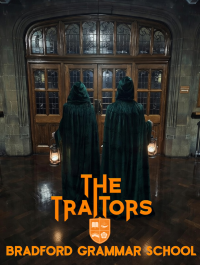
Head of Computer Science and Year 9 form tutor at Bradford Grammar School, Nadeem Asghar reflects on how introducing a Traitors-style game in form time transformed relationships, communication and engagement – revealing unexpected psychological and academic benefits along the way.
I didn’t set out to revolutionise form time.
It started, as so many good ideas do, with a simple question from a student: “Sir, could we do The Traitors in form?”
I tutor a close group of 20 Year 9s – we talk, we quiz, we read – so when someone felt comfortable enough to suggest it, my instinct wasn’t to shut it down. It was to say: convince me.
He came back with an impressively detailed set of rules. At home, we’re a family of devoted Traitors fans, so the concept needed no selling. I asked the form how many of them actually watched the show. A few hadn’t, so we filled in the gaps. Then we went all in.
And I mean all in!
On the first Monday morning, they walked into the room to find their photos printed and mounted in proper Traitors-style frames. The reaction was instant – excitement, nerves, anticipation. I sat them in a semi-circle, explained the rules and channelled my inner Claudia Winkleman as I tapped my chosen Traitors on the shoulder. There were three Traitors and one secret recruitment later.
From the outset, there were firm boundaries. These were non-negotiable.
No talking about the game in lessons. If any teacher fed back that learning was being disrupted, the game would stop immediately. No devices to discuss the game – not in school, not at home, not on WhatsApp. And one important linguistic tweak: there would be no “murders.” We called them removals.
What fascinated me straight away was how seriously they took those rules. In fact, when one student broke the WhatsApp rule, another reported it the very next day. They were protecting the integrity of the game – and, without realising it, modelling honesty and accountability.
That level of trust doesn’t happen by accident. Form time here isn’t a rigid, one-size-fits-all slot. As tutors, we are trusted to use it purposefully – to build relationships, support students and be creative. It’s that autonomy that makes initiatives like The Traitors possible and gives students another reason to look forward to coming into school.
As a computer science teacher, I’m very conscious of screen time. There’s a reason why phone policies are being tightened in schools – young people are increasingly used to hiding behind a device. But you can’t read tone, posture or micro-expressions on a screen.
In The Traitors, players have to look people in the eye… and suddenly, my form had no choice but to do exactly that.
Every banishment around the table involved structured discussion: Who do you suspect? Why? What evidence do you have? I stepped back almost completely and let them take ownership. What emerged was remarkable. Students began analysing body language, inconsistencies and social dynamics. They talked openly about trust, influence, loyalty, popularity and bias. They debated strategy. They even discussed double bluffing – something I wouldn’t normally expect from 13- and 14-year-olds.
Without a single psychology lesson, they were learning psychology.
Before the game, the seating pattern in my form was predictable. A group of girls on one side. Two clusters of boys elsewhere. Comfortable, familiar, but largely static.
Around the round table, those divisions disappeared.
They listened to each other. They challenged each other. They persuaded. One of the quietest students in the form – new to the school – became a Traitor. I wanted to integrate him, to give him a role and a voice. Another usually reserved student emerged as a confident, articulate leader, steering discussion and influencing outcomes right up until the dramatic final moments.
Friendships shifted, new ones formed and conversations spilled out into break and lunchtime. They became closer as a group in a way that weeks of “normal” form time simply hadn’t achieved.
The game wasn’t just social. It was academic.
Challenges mirrored the TV show – quick, energetic tasks, quizzes and even a frantic five-second Lego dash to find hidden “shields.” But the biggest challenge of all was earning commendations.
Every commendation added to the prize pot, so every lesson became an opportunity. Over two weeks, the form earned an impressive 82 commendations. Behaviour improved. Work rate increased. Students asked questions, volunteered answers and supported each other – not because they were told to, but because they wanted to.
On the final day, we had five players left in the game. Two Traitors and three Faithful. We took it outside, around the fire pit, and the Faithful successfully banished the Traitors. The reactions were priceless: shock, relief, laughter. One or two heads in hands. It would have made brilliant television.
I converted the prize pot into sweets and when the Faithful eventually won, they shared the prize with everyone anyway.
That told me everything I needed to know.
We’re playing Season Two this term and making it more ambitious. We’re introducing secret relationships – mock siblings who must protect each other without revealing whether they’re Faithful or Traitors. There will be more physical challenges and more student-led planning.
At its heart, The Traitors in form time isn’t really about deception or drama. It’s about relationships. It’s about teaching young people how to communicate, how to read a room, how to listen, how to reason, how to belong – without a screen acting as a shield.
What began with a student’s idea has grown into something far more meaningful, and I can’t wait to see where this next season takes us.
“At its heart, The Traitors in form time isn’t really about deception or drama. It’s about relationships. It’s about teaching young people how to communicate, how to read a room, how to listen, how to reason, how to belong – without a screen acting as a shield.”